Writing Part II: Grammar
Knowledge-Building for Teachers Series

Thus I got into my bones the essential structure of the ordinary British sentence — which is a noble thing.
—Winston Churchill
A few thoughts on grammar: First, teach it explicitly. Yes, it should be taught in the context of reading and writing, but teach it directly and explicitly. Second, teach the vocabulary. We enrich our children’s vocabulary from all other content areas — literature, math, science, history — and grammatical terms should be included as well. Don’t be afraid to teach noun, verb, clause, subject, predicate. Naming something allows us to communicate about that thing or idea easily and efficiently. If they can learn the meaning of photosynthesis, they can learn the meaning of preposition.
Podcasts
Season Two: Episode 2: Expertise Goes Global with Jo-Anne Dooner and Geoff Ongley on Chalk Dust
This is a wonderful episode on grammar and writing that came out just in time for this post. Jo-Anne does a lovely job of teaching grammar explicitly and then embedding it in the context of reading and writing. She has fun grammar videos with chants and gestures. I also love that she is not afraid to teach elementary students proper grammar vocabulary. She asserts, “I think students can handle any metalanguage as long as you teach it.”
Article
“Grammar is moving back to the fore.” This was a great piece about the importance of grammar and how to embed it in instruction in a way that will stick. It is a good opening to a much deeper conversation about grammar and how it should be taught.
Curricula
The Grammar Project now part of Ochre Education
An amazing free resource for K-6 with slide decks, worksheets, posters, and support resources.
Well-Ordered Language by Tammy Peters and Dr. Daniel Coupland
This is a beautifully written grammar curriculum for grades 3-7. It has a logical sequence, diagramming, models from rich literature, songs and chants, and vocabulary instruction of grammatical terms.
Sentence Composing for Elementary School: A Worktext to Build Better Sentences by Don and Jenny Killgallon
Recommended by Sean Morrisey, the Killgallon worktexts use the sentence composing techniques of “chunking, unscrambling, combining, expanding, and imitating” to improve writing at the sentence level. Other aspects include using model sentences taken from rich literature and application exercises at the sentence and paragraph level.
Grammar by Diagram - Third Edition by Cindy L. Vitto
This is grammar instruction for adult learners. After you complete this book, you will be well equipped with in-depth knowledge on grammar.
Webinars
The Writing Network Connect #6 — Think Forward Educators with Jeanette Breen and Dr Nathaniel Swain
This teacher-friendly, workshop-style webinar focuses on what grammar instruction looks like in the classroom. A few resources they reference include The Writing Revolution and Write To Learn.
Why Grammar Is Essential | Lecture 7 with Dr. Daniel Coupland
An excellent argument on how important grammar is in education. Referencing The War Against Grammar by David Mulroy, Coupland contends that if students don’t have grammar instruction, they are at a disadvantage because an understanding of our language is critical to understanding any of the other subjects such as math, history, art, etc. He also gives four essential components of quality grammar instruction: terms (vocabulary), analysis (relationships among words), editing, and exposure to rich language and models.
Syntax Matters: A Kendore Learning Webinar Featuring William Van Cleave
This webinar supports syntax instruction that should: “use the language of syntax to facilitate better writing and reading, teach concepts using a logical, sequential approach, avoid rote memorization and excessive labeling activities, and create reinforcing activities that engage students in genuine reading comprehension and writing practice.”
Reference
Advocates for embedding grammar in the context of reading and writing, The Writing Revolution’s series of books, trainings, and resources make grammar instruction accessible and practical for teachers and students.
Part of No More Marking, the Writing Hub offers practice with grammatical skills through lessons, videos, slides, assessments, and more. You can read more about it here.
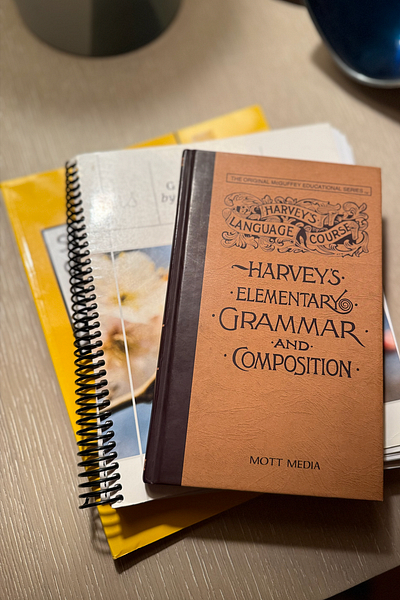
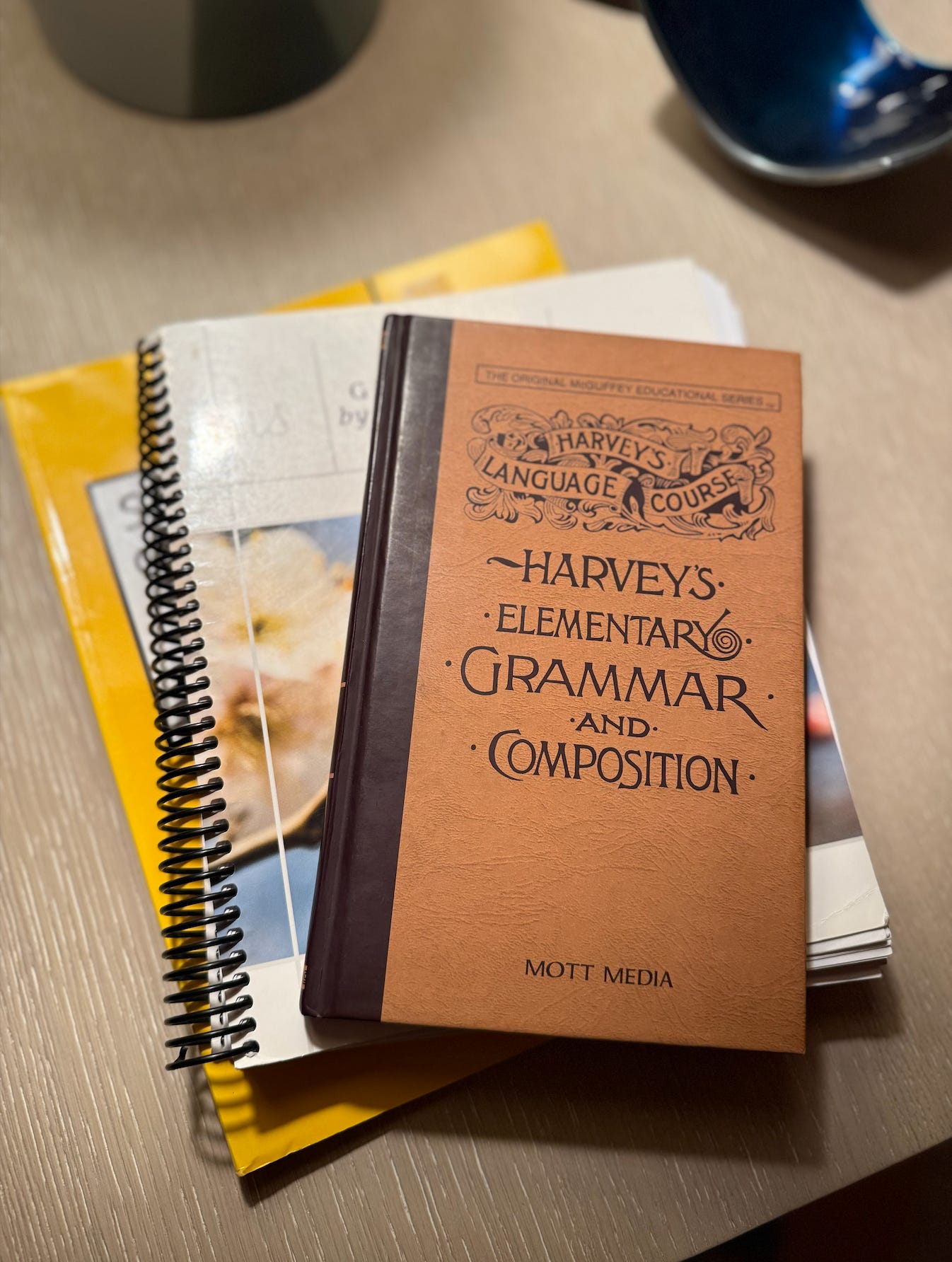
Harvey’s Elementary Grammar and Composition First Edition by Thomas Harvey
Written in the late 1800’s, this is a great little book on grammar. It covers in depth the parts of speech, their properties, syntax, composition, punctuation, and diagramming.