
Poetry
Knowledge-Building for Teachers Series

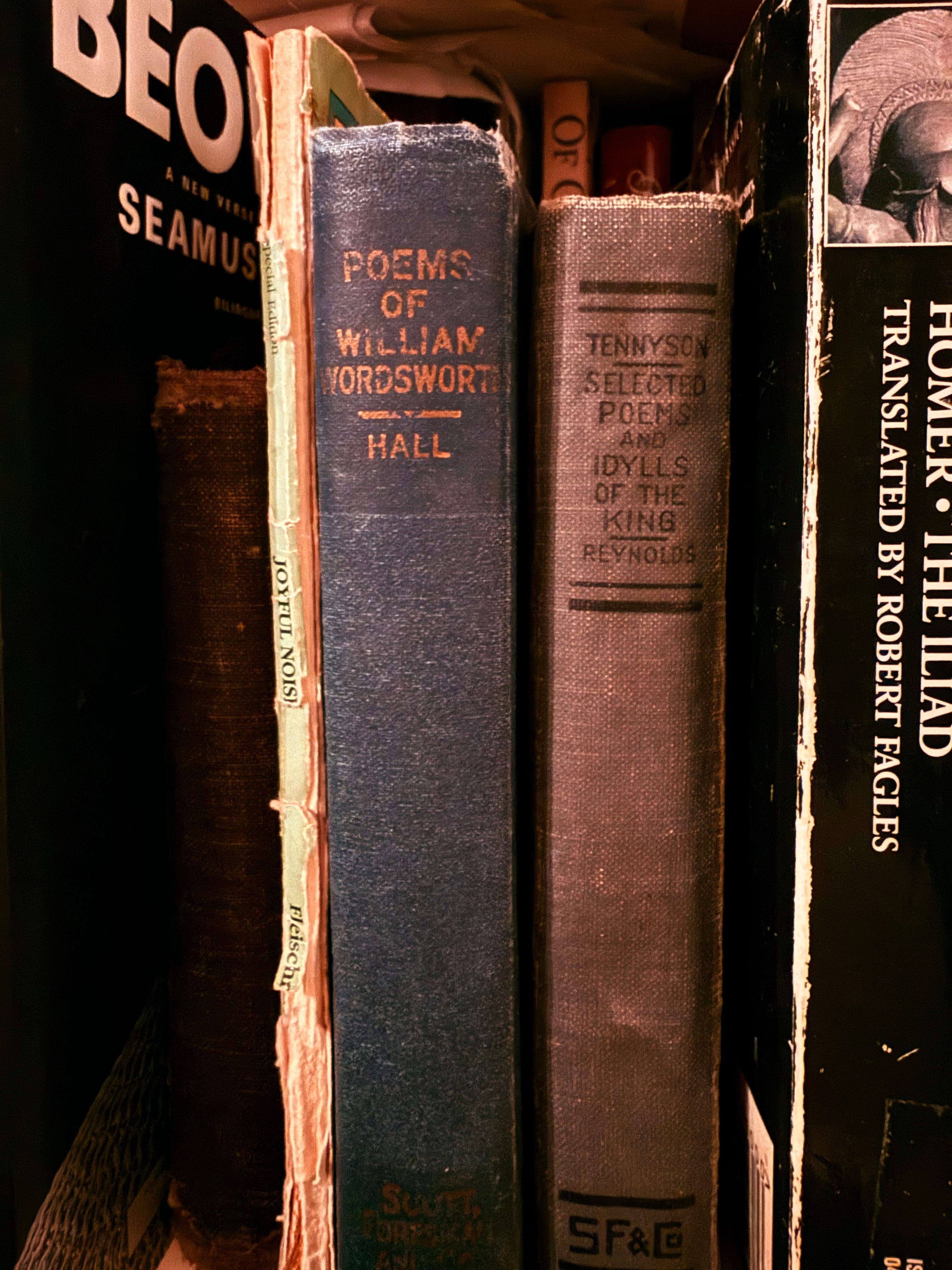
“. . . the poem has ushered you out of the known into the unknown.” — Malcolm Guite, The Imagination Bodies Forth
As a child, my grandmother memorized the entire book of 101 Famous Poems. She would send us cassette tapes of her reading poetry, and one of my favorites was “Hiawatha’s Childhood” by Henry Wadsworth Longfellow. Now I get to pass on this wondrous poem to my third grade students. At first glance it looks dense and difficult. But as soon as you begin to say the words out loud, it is like music. Try it yourself:
Hiawatha’s Childhood
By the shores of Gitche Gumee,
By the shining Big-Sea-Water,
Stood the wigwam of Nokomis,
Daughter of the Moon, Nokomis.
Dark behind it rose the forest,
Rose the black and gloomy pine-trees,
Rose the firs with cones upon them;
Bright before it beat the water.
Beat the clear and sunny water,
Beat the shining Big-Sea-Water.
Excerpt from “Hiawatha’s Childhood” by Henry Wadsworth Longfellow
How I Teach Poetry
2nd Grade Fluency Routine with CKLA
Poetry is one of my favorite times of the day. We enjoy together rich and interesting combinations of language spoken with laughter, or wonder, or boldness. And I get so proud when my students get up on a stage in front of a crowd and perform a poem they have worked so hard to memorize.
I schedule a 5-10 minute block of time in the day for poetry. I create a poetry book for each student that they keep in their desk all year. I choose three or four poems to practice in preparation for poetry recitals. The children perform the poems in class and at poetry recitals for their family and friends.
My lesson structure for teaching poetry:
Read the poem aloud, modeling prosody.
Explain some of the vocabulary and phrases.
Learn the poem by stanza or small sections as a class.
Include gestures. This is particularly helpful for memorization. (Read about the benefits of gestures in The Extended Mind in Action by Emma Turner, David Goodwin, and Oliver Caviglioli.)
Spend one to two weeks on a poem depending on its length.
Pair students up to practice when they are preparing for a recital.
Scope and Sequence
If you are unsure of which poems to teach (there are so many amazing poems to choose from!), the Core Knowledge Sequence has a set of recommended poems per grade level. The Core Knowledge Foundation also has an anthology of the poems for purchase for grades K-5.
Listen, My Children: Poems for Kindergartners
Listen, My Children: Poems for First Graders
Listen, My Children: Poems for Second Graders
Listen, My Children: Poems for Third Graders
Listen, My Children: Poems for Fourth Graders
Listen, My Children: Poems for Fifth Graders
Talk on Poetry
The Imagination Bodies Forth - a talk by Malcolm Guite
This is a beautiful analysis of Shakespeare’s passage on poets and poetry from Theseus’ speech in A Midsummer Night’s Dream and how poets embody the imagination into comprehensible form. One example he shares is how John Keats, in “Ode to a Nightingale,” “introduces you to these magic casements opening on perilous seas and fairy lands forlorn and you realize that the poem has ushered you out of the known into the unknown.”
Introductory Course
ModPo
If you are interested in building your own poetry appreciation and understanding, ModPo offers an introductory course on modern and contemporary poetry. It is also a community of poets, poetry lovers, and those interested in learning more about poetry.
A Few of My Childhood Favorites
One Hundred and One Famous Poems by Roy Jay Cook
A Child’s Garden of Verses by Robert Louis Stevenson
I especially love the version illustrated by Tasha Tudor.
Idylls of the King by Alfred Lord Tennyson
Joyful Noise: Poems for Two Voices by Paul Fleishman
The Collected Poems of Wordsworth by William Wordsworth
And so many more!
Thank you, Laura!