
Opportunities to Respond, Pt 2
Knowledge-Building for Teachers Series

Welcome to part two of Opportunities to Respond. Part one was all about building in opportunities for verbal responses. This post is all about written responses. When I taught second grade, most of the responding was verbal, so it has been an adjustment to build in more writing opportunities for third grade students. I also think they can go farther and faster than I originally thought, and I will be increasing the writing rigor for next year. The biggest support for me has been The Writing Revolution and several of the Teach Like a Champion writing techniques. As I wrote about in the last post, I recently attended the Science of Reading training put on by Doug Lemov, Colleen Driggs, and the TLAC team. Writing opportunities are embedded throughout their reading lessons, (and in their trainings!), and I was struck by how the learning became more meaningful when I (acting as a student) was given the opportunity to express in written form my understanding of the content. After that training, I have now added in more opportunities for writing in the booklets I create (you can read Doug’s post about my booklets here).
Stop and Jot
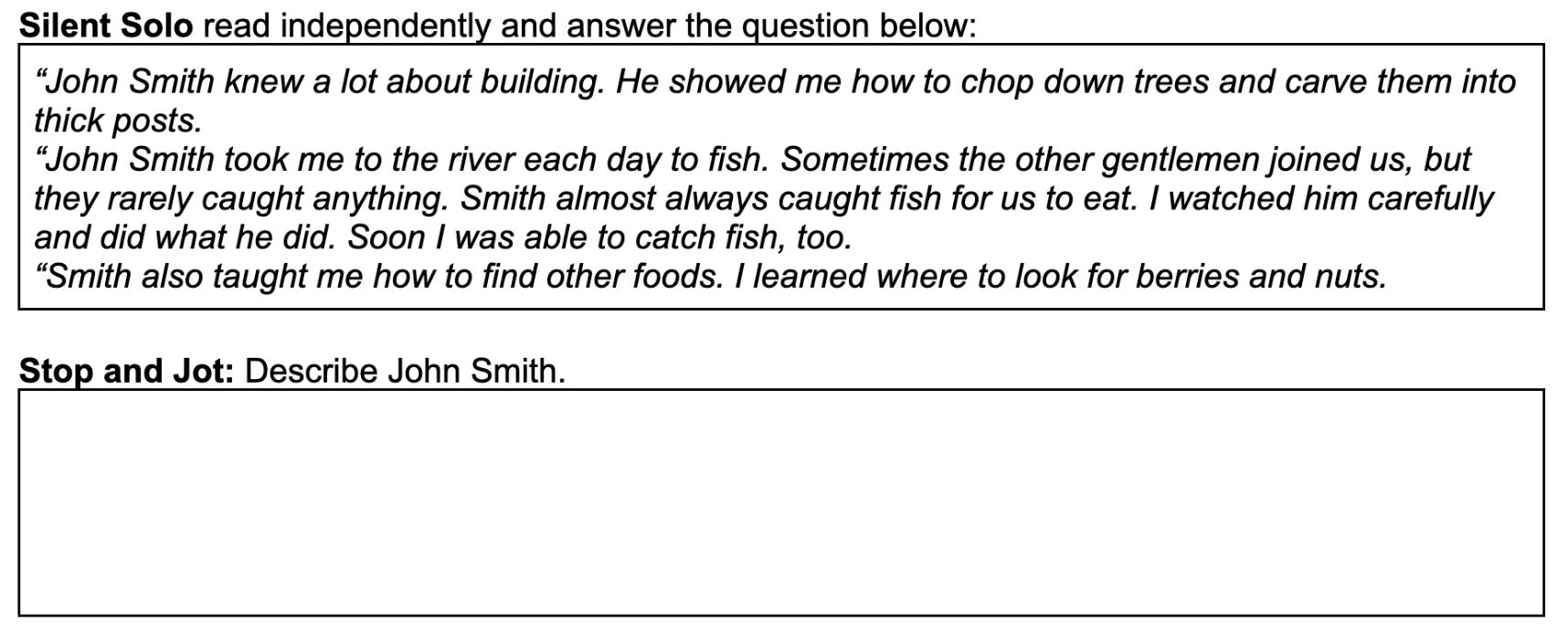
Taken from Teach Like a Champion, Stop and Jot is one of the first opportunities for students to write during the lesson. I consider it a sort of writing and thinking warm up in preparation for an independent writing piece at the end. Students only have to write key ideas, not full sentences. It is also a way to give a variety of opportunities to respond verbally and in writing. I have been combining Stop and Jot with a Silent Solo reading to provide students independent reading opportunities. The Stop and Jot gives a purpose for independent reading and helps keep students accountable for their reading. After giving students a specified amount of time to read and write, usually 1-2 minutes, I will cold call a few students to share their responses.
Resources:
Stop and Jot - The Teacher Toolkit
Sentence Expansion
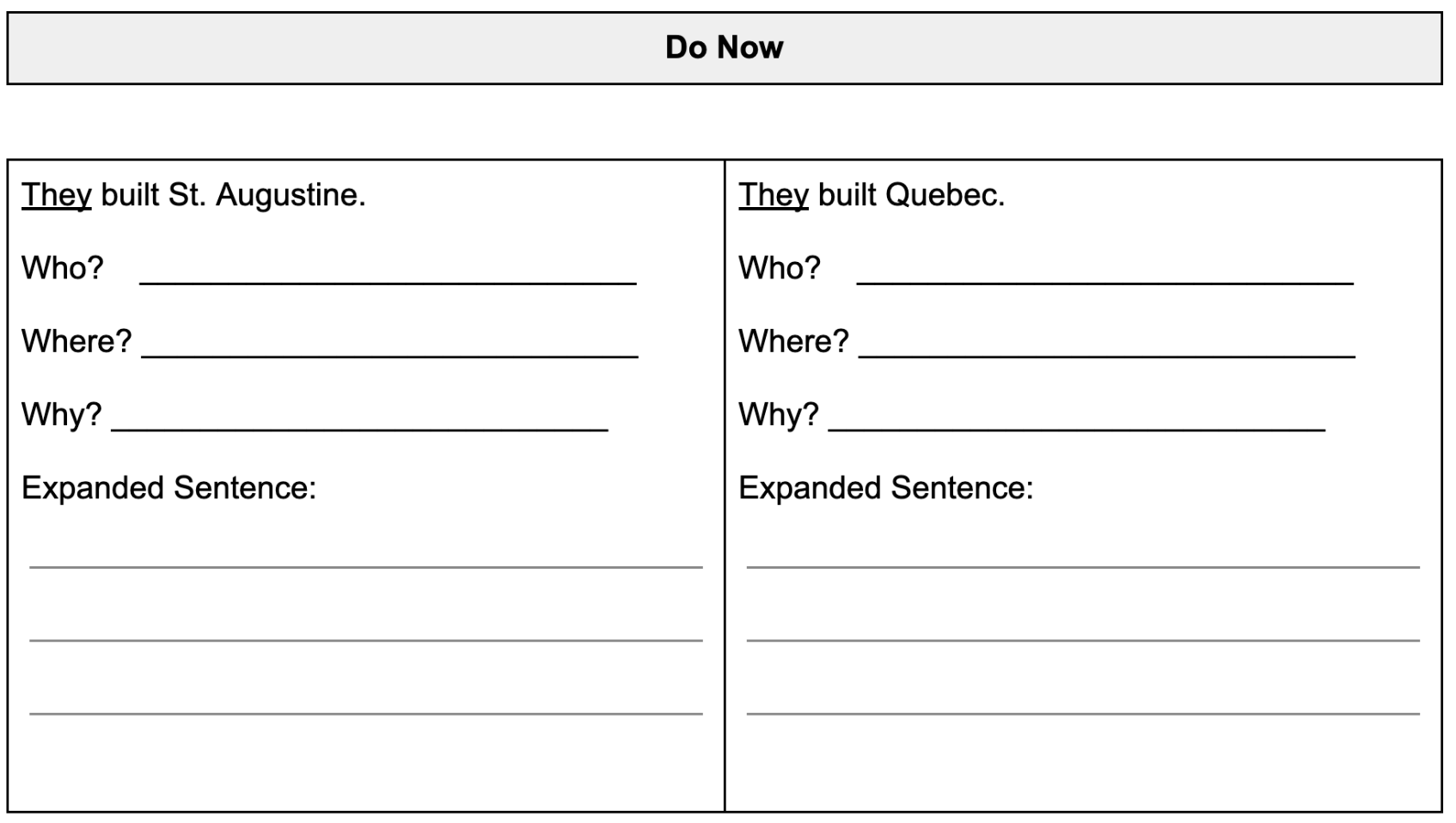
The Writing Revolution sentence expansion activities are essential for retrieval practice and consolidating understanding. I use them for Do Nows to retrieve prior learning and to intentionally connect what they have learned previously to what will be taught in the new lesson. I also use them during the lesson to help them consolidate what they are learning in the moment. A few of my go-tos are expanding with the 5 Ws’ and H or because, but, so. The example above is from a Do Now for the first lesson on a unit about the English Colonies. It is meant to help retrieve what they have learned in a previous unit about the Spanish and French explorers, the locations of their colonies in North America, and their motivations for setting up a colony to give the students context for our study of the English colonies.

Resources:
read2Learn — Think Forward Educators by Nathaniel Swain, Samantha Charlton, and Melanie Hart. Read2Learn Core Knowledge lessons was the inspiration to include The Writing Revolution sentence expansion activities into my reading lessons.
Crafting sentences: Four simple writing techniques to elevate your students’ learning - Teach Well by Ingrid Sealey
To Boost Learning, Weave Writing Activities Into Regular Instruction by Natalie Wexler
Mini Whiteboards
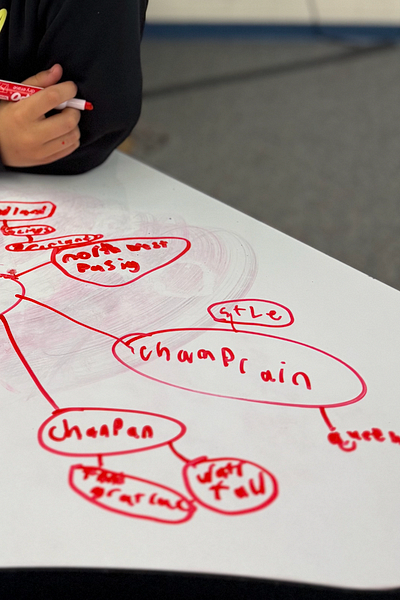
One of my routines is to read a portion of the reading as a class (see my first post here), then capture the key ideas on a chart on the whiteboard. Then after we have read the entire text for the day, students will reread key portions of the text and write the key ideas themselves. Something new I have added in is having them write these key ideas on their mini whiteboards so I can see if they were able to identify the key ideas. It is always surprising to me (even after everything I know about how learning happens), how this really stretches students. Even though we have already done it together as a class and recited it verbally, when they are asked to write it themselves, it still requires them to think hard about the learning.
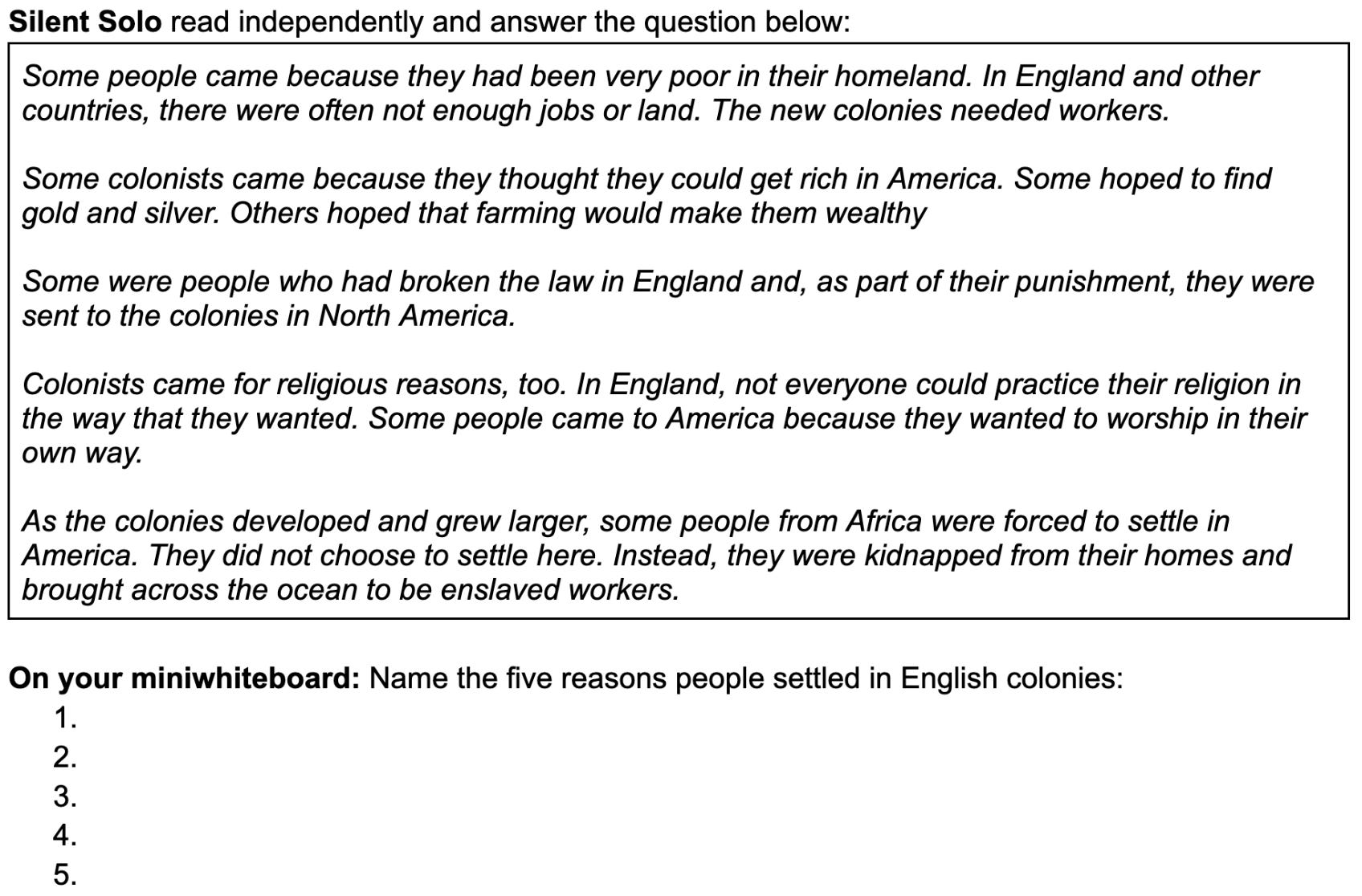
In the example below, we had read this portion of the text as a class, and through a combination of choral response, turn and talk, and cold calling, pulled out the reasons people settled in the English colonies. I then captured those ideas on the whiteboard. However, when they were asked to repeat this exercise again independently (with the ideas still written up on the board) it was striking to me how effortful it was for them to complete the exercise. It was also a testament to me how we can kid ourselves into thinking “Oh yeah, they’ve got this”, when really, students need multiple opportunities to grapple with new knowledge before they begin to learn it.
Resources:
Mini-White Boards: Where They Maximize Student Learning, Where They Don’t with Jon Harper, Brett Benson, Amber Haven, Andrew Watson, and Dylan Kane
You Should Use Mini Whiteboards by Dylan Kane at Five Twelve Thirteen
The Tips for Teachers guide to Mini-whiteboards by Craig Barton
Concept Map
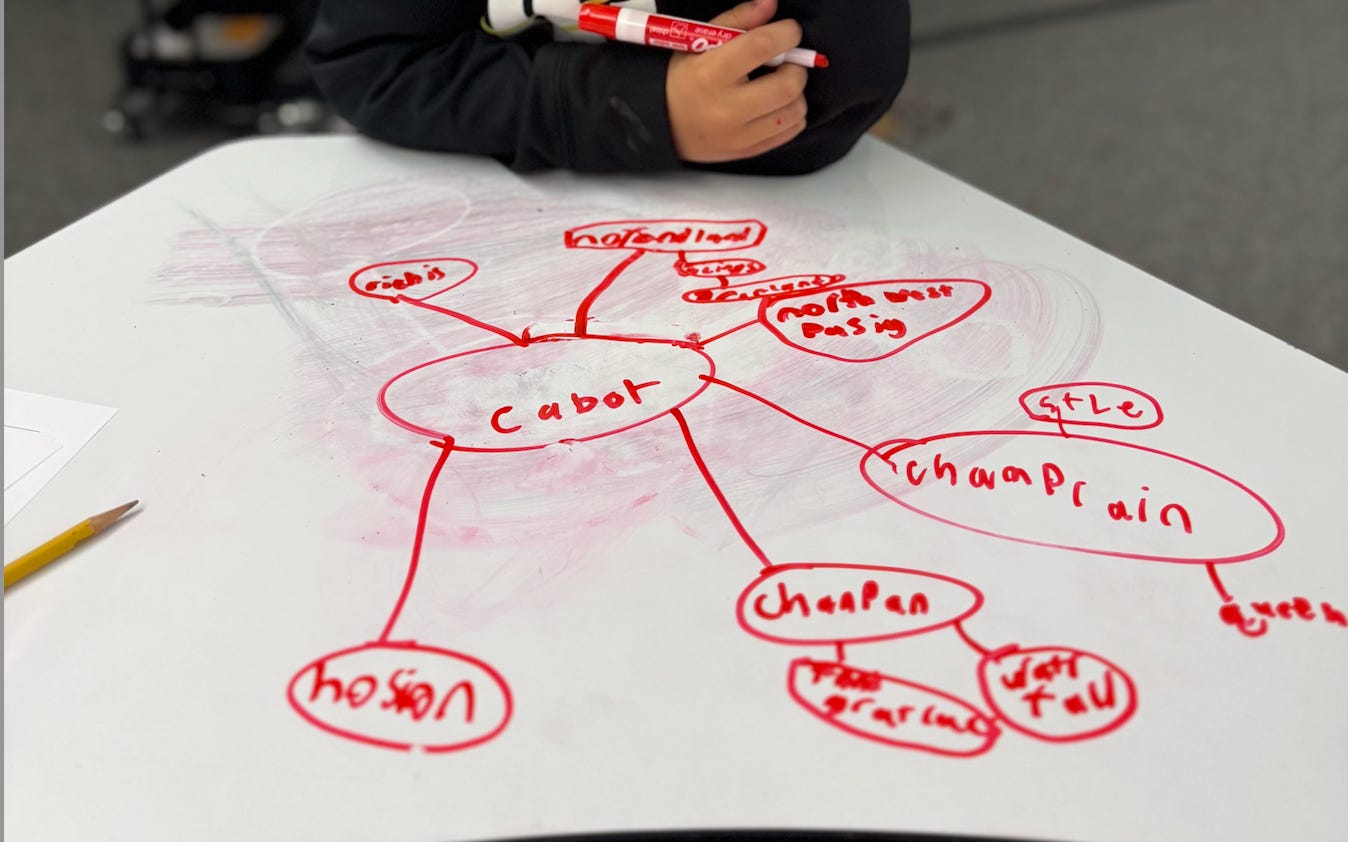
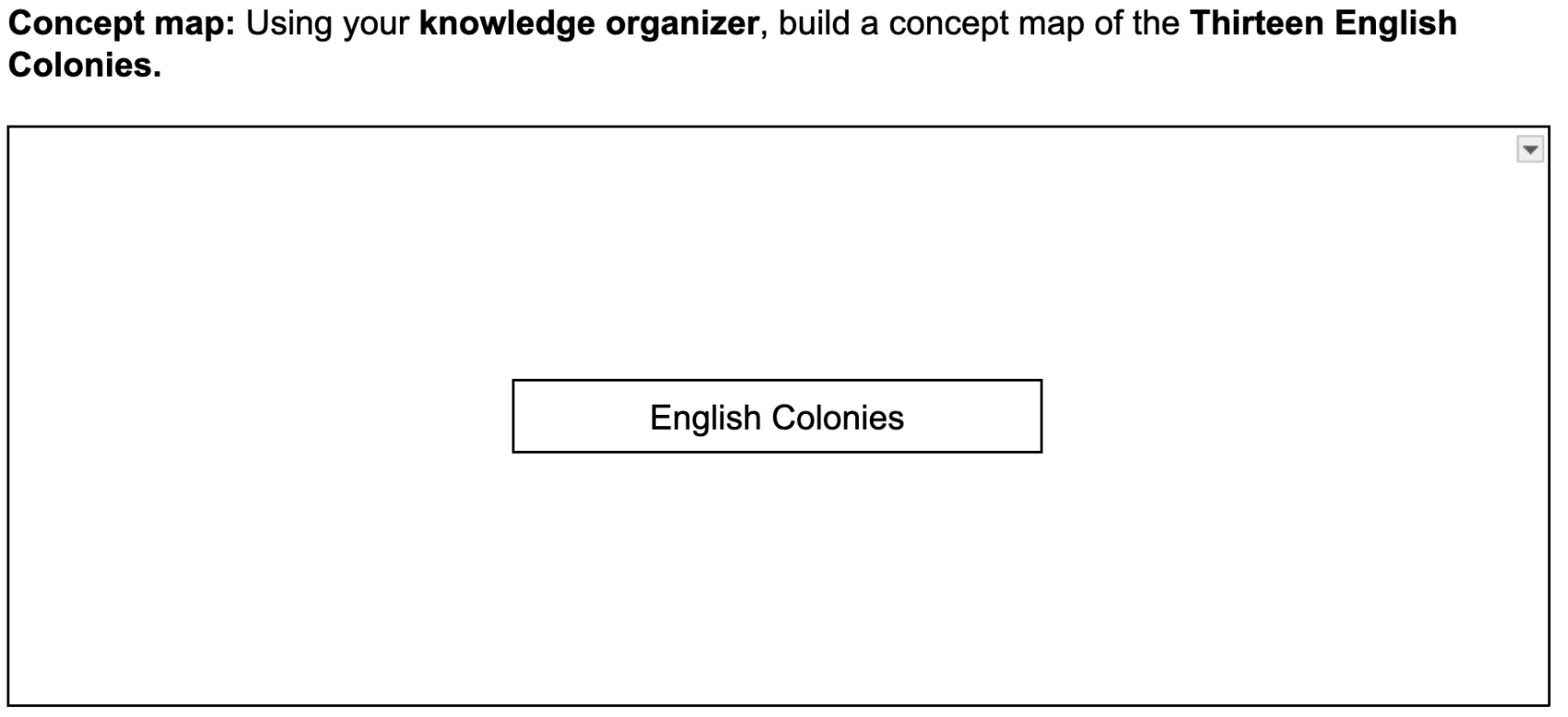
Using concept maps in my instruction is new for me. At first, I wasn’t sure if this would be effective for third grade students who are still building their knowledge. But they have a lot of knowledge from second and third grade that does connect. We are still in the building- them-as-a-class stage, but they are getting the hang of it, and they really enjoy creating them. I have used them as a final activity for a unit or for a preteaching opportunity using a knowledge organizer to introduce a new unit.
Resources:
How and Why to Use Concept Maps | Cult of Pedagogy with Dr. Kripa Sundar and Dr. Pooja Agarwal
Concept Maps: A Tool for Strengthening Background Knowledge and Boosting Comprehension - Scientists in the Making) by Marcie Samayoa
Concept Mapping A Powerful Tool for Learning by Kripa Sundar
Concept Maps by Reading Rockets
Single-Paragraph Outline and Paragraph Writing
I have been gradually increasing the complexity of independent writing opportunities at the end of a lesson. At the beginning of the year, I would have students fill in a sentence stem:

Then the sentence stems to fill in were replaced with sample sentence stems to help them get started for a longer writing piece.
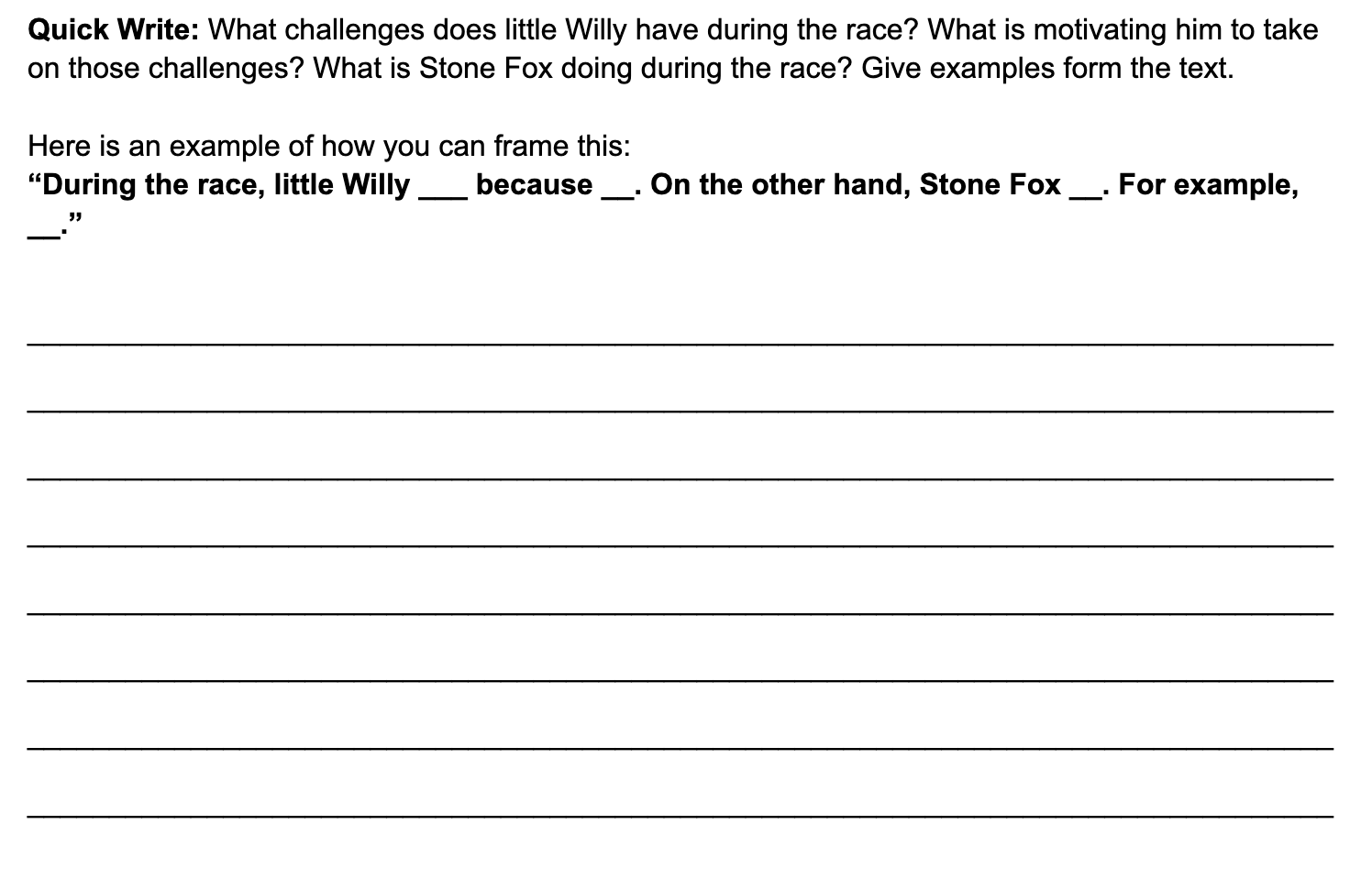
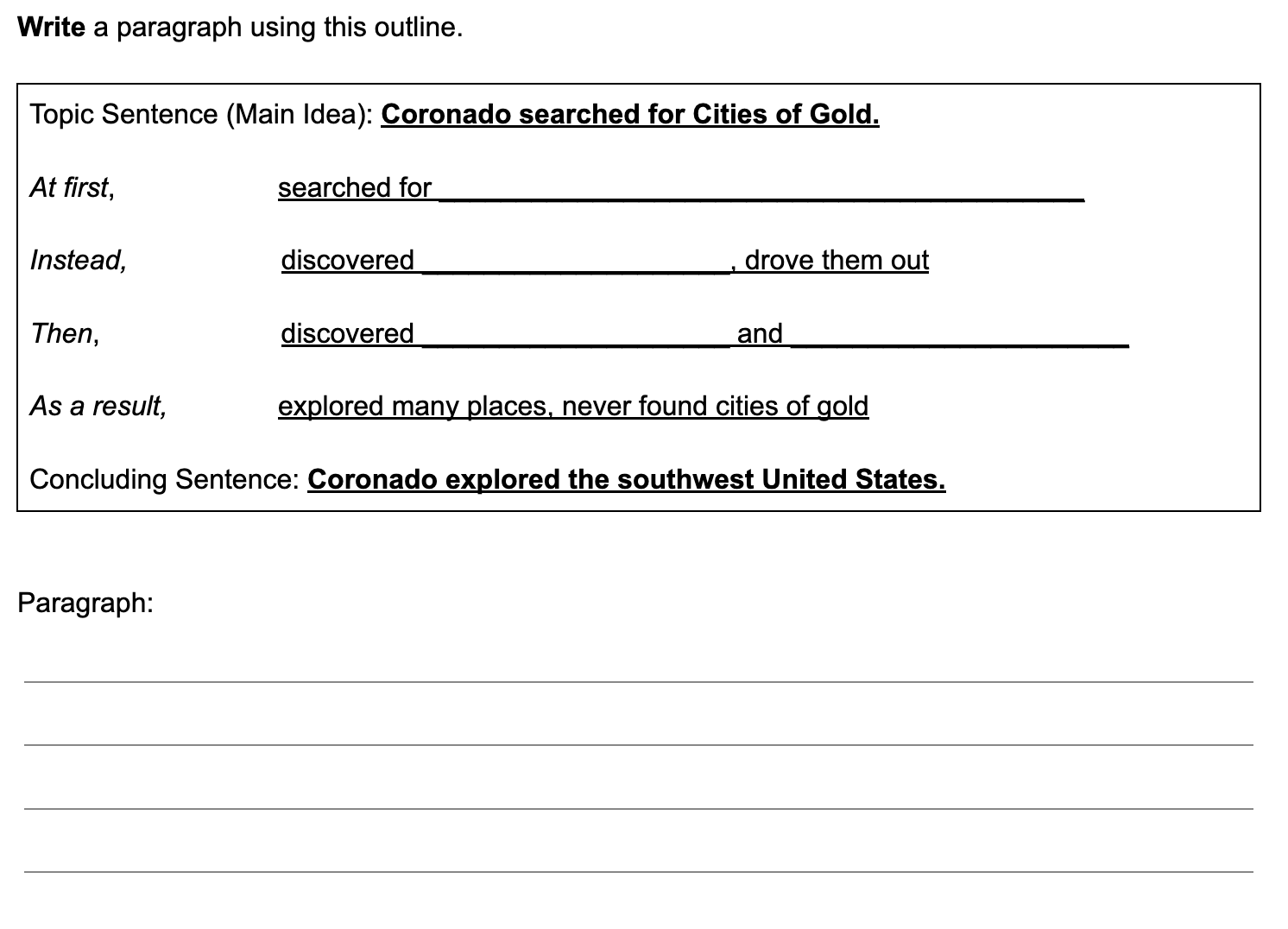
These scaffolded independent writing pieces have culminated in being able to write a single paragraph outline (SPO) from The Writing Revolution. When I first introduced the SPO, we would build the outline together. The goal is that they will be able to fill out the SPO on their own when they are ready. Another scaffold I provided when first introducing the SPO is verbally creating model sentences from the key words as a whole class before having them write the paragraph on their own. I also circulate while they write to check they are writing complete sentences. At the end, I will share model sentences and paragraphs with the class.
Resources:
AI and English teachers: pens and a (writing) revolution by Nick
Great blog. Lots of practical strategies and exemplified.
This is a great reminder about incorporating stop and jots. When I’m pressed for time and pushing to get through my math content, it’s so easy to let those go. I definitely agree with how much they help with processing and retaining information.