
Intervention - Reading Pt. 2
Knowledge-Building for Teachers Series


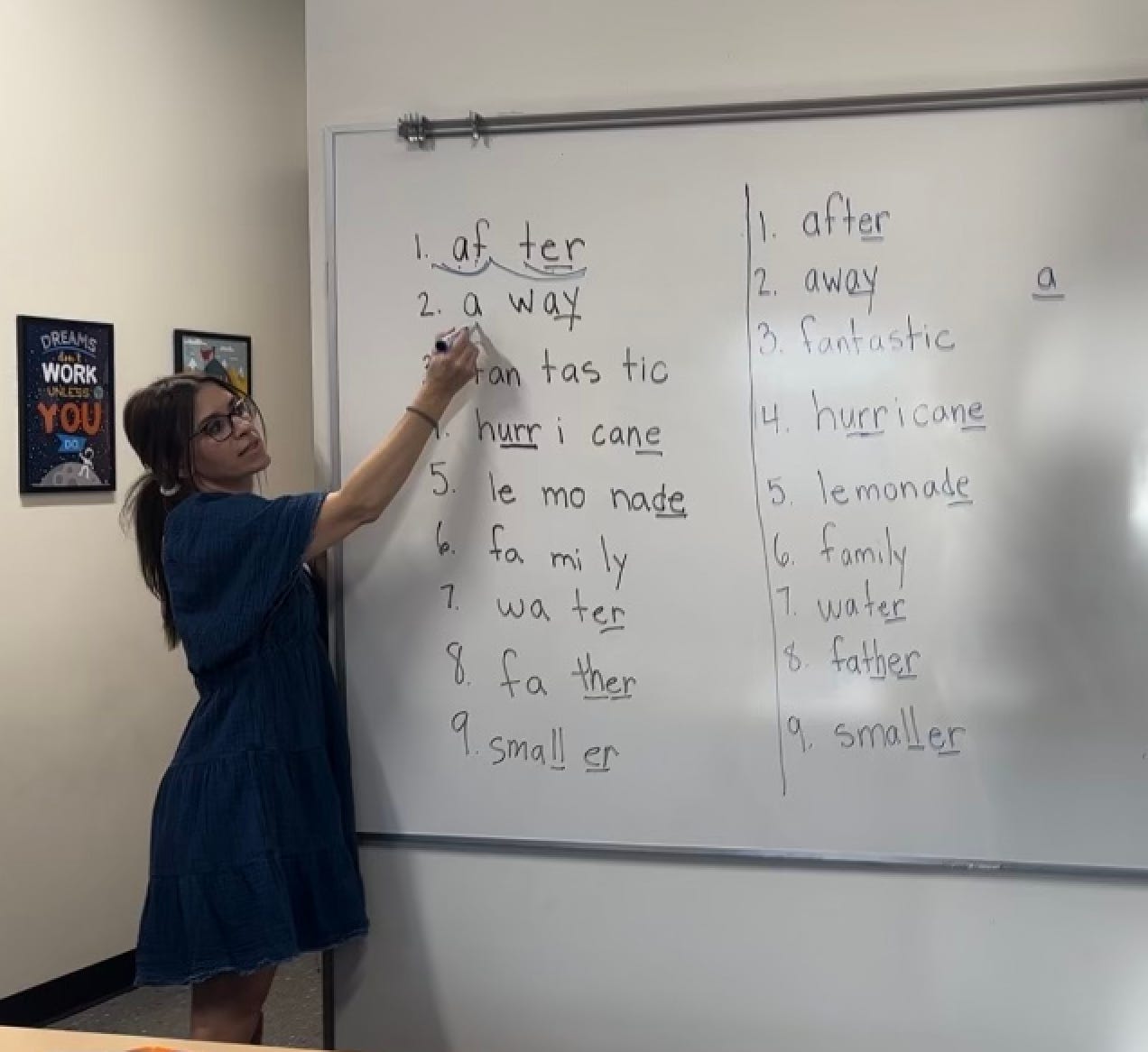
Part 2 of Intervention—Reading features guest contributor, Elana Gordon. Elana is a reading interventionist in Cicero and creator of the podcast The Road to Reading Podcast and the Substack Voices from the Field. She has generously shared her insights and an amazing list of resources below.
Elana: Like many of you, I come from a background of Balanced Literacy and being unaware of how heavily learning science should have impacted my classroom. When I began learning about Structured Literacy practices, I was more successful. I think the question we all have to ask ourselves is, is that enough, or is there something else that is more targeted or more efficient?
I have been lucky to meet some incredible educators who have influenced my current understandings about learning and how to successfully support any child. Not every teacher has access to training that requires additional money, so this list, although not exhaustive, is representative of some good options. I don’t believe there is a silver bullet or “one way” that works. Many educators have helped turn students’ trajectories around using many different resources. I think the key to success lies in our willingness to learn, apply, learn some more, and repeat.
Podcasts
Summer Special 3: Meet Project for Adolescent Literacy (PAL) with The Road to Reading Podcast
PAL is an organization that supports the advancement of adolescent literacy instruction. In this episode, the PAL team shares their mission, vision, and how educators can get involved in design sprints.
Intensive Intervention for Tier 2 & 3: Success for Multilinguals and all Students Who Struggle with Dr. Elsa Cárdenas-Hagan and EDVIEW360 - Podcast
Dr. Elsa Cárdenas-Hagan shares how teachers can support multilingual learners using structured literacy practices and how tiers 2 and 3 can be intensified and adjusted for our ELLs.
Programs
WORD CONNECTIONS created by Jessica Toster PhD
This free reading intervention was developed and tested by Dr. Jessica Toste and colleagues at The University of Texas at Austin. Word Connections is a supplemental reading intervention program. It includes 40 lessons (40 min each), divided into four units of instruction. Word Connections was developed for students in third grade and above who continue to experience challenges with word reading even though they have developed foundational decoding skills. The lessons focus on promoting automaticity with reading “big words.” This approach to multisyllabic word reading integrates multiple opportunities for students to manipulate and read words, rather than focusing on rule-based instruction.
PHONICS for Reading created by Anita Archer
This program has been updated to include student feedback. Renowned reading expert Dr. Anita Archer leveraged decades of research into the Science of Reading and the Science of Instruction to develop the structured PHONICS for Reading program. This systematic, direct, engaging, and success-oriented explicit instruction program delivers essential skills in the correct sequence, helping older students who have consistently struggled with word-level difficulties.
Reading Simplified created by Marnie Ginsberg
Reading Simplified is a linguistic phonics approach to teaching literacy. It is a streamlined vision for accelerating decoding, word ID, and fluency created by a researcher and practicing teacher.
EBLI Evidence Based Literacy Instruction developed by Nora Chahbazi
EBLI is a linguistic phonics approach to teaching literacy through integrated instruction. Teachers have the tools to teach reading, spelling, writing, and handwriting simultaneously, using vocabulary and texts for student groups of all sizes and ability levels- from large classrooms to intensive intervention.
Stari created by SERP Institute
STARI is a literature-focused, Tier II intervention for students in grades 6 and up who read two or more years below grade level. Most of it is free.
Books
Next STEPS in Literacy Instruction: Connecting Assessments to Effective Interventions by Susan Smartt Ph.D., Deborah Glaser Ed.D.
Fully updated with the latest reading research and models, this teacher-friendly planning guide matches the items of today’s most popular reading assessments with Tiers 1, 2, and 3 interventions, strategies, and activities that help struggling readers succeed.
10 Success Factors for Literacy Intervention: Getting Results with MTSS in Elementary Schools by Susan L. Hall
This book provides answers in the form of 10 success factors for implementing MTSS. It includes the “whys” and “hows” of:
Grouping by skill deficit and using diagnostic assessments to get helpful data for grouping and regrouping.
Implementing an instructional delivery model, including the “walk-to-intervention” model.
Using intervention time wisely and being aware of what makes an intervention effective.
Providing teachers with the materials they need for effective lessons and delivering differentiated professional development for administrators, reading coaches, teachers, and instructional assistants.
Monitoring progress regularly and conducting non-evaluative observations of intervention instruction.
Practical, comprehensive, and evidence-based, 10 Success Factors for Literacy Intervention provides the guidance educators need to move from disappointing results to solid gains in students’ literacy achievement.
Structured Literacy Interventions: Teaching Students with Reading Difficulties, Grades K-6 by Louise Spear-Swerling
This book brings together leading experts to present a wealth of SL interventions for different components of literacy. Chapters describe instructional strategies for supporting phonological awareness, basic and multisyllabic word decoding, spelling, reading fluency, vocabulary, oral and reading comprehension, and written expression, especially for at-risk readers and those with disabilities.
The Structured Literacy Planner: Designing Interventions for Common Reading Difficulties, Grades 1-9 by Louise Spear-Swerling
This is a companion book to the first Structured Literacy Interventions. This book walks educators through designing SL interventions for students with common types of reading difficulties — word reading, comprehension, or a combination of both.
Assessing Reading Multiple Measures, 2nd Edition by Linda Diamond, B. J. Thorsnes, Orna Lenchner, Michael Milone, Jacalyn Mahler
This is an updated edition that provides resources to both elementary and secondary educators. New to this edition: MASI-R Oral Reading Fluency Measures, CORE Reading Maze Comprehension Test, CORE Graded High-Frequency Word Survey, and CORE Vocabulary Screening.
Webinars
A Structured Linguistic Literacy Summit
This is a free virtual summit held each summer. Presentations and panel discussions include preeminent reading and cognitive science researchers, thoughtful practitioners who have shifted their instructional approaches, and many other brave literacy champions who aim to promote better student outcomes.
Oregon RTI - ORTIi Professional Learning by Content Category
A professional learning library that contains resources by content category.
Home Connections
Read Not Guess is designed for parents. Clear, easy-to-follow instructions will help you support — and monitor — your child’s reading progress. The lessons are meant for busy families and should take only 5-10 minutes a day to work through.
Teach Your Child to Read in 100 Easy Lessons by Siegfried Engelmann, Phyllis Haddox, Elaine Bruner
A step-by-step, phonics-based program that teaches your child to read in just twenty minutes a day.
General Resources
Includes a long list of resources to support adolescent literacy interventions
An organization that serves state- and community-facing education advocacy efforts (including Project Adolescent Literacy) to promote coalition building that honors the power of local, authentic agenda setting to drive sustainable educational excellence and equity.
AdLit is an organization that helps educators learn more about the state of adolescent literacy, get practical advice on teaching reading and writing, and browse the library of research, reports, and guides.
 | A guest post by
|