
Building Knowledge Lessons
Knowledge-Building for Teachers Series

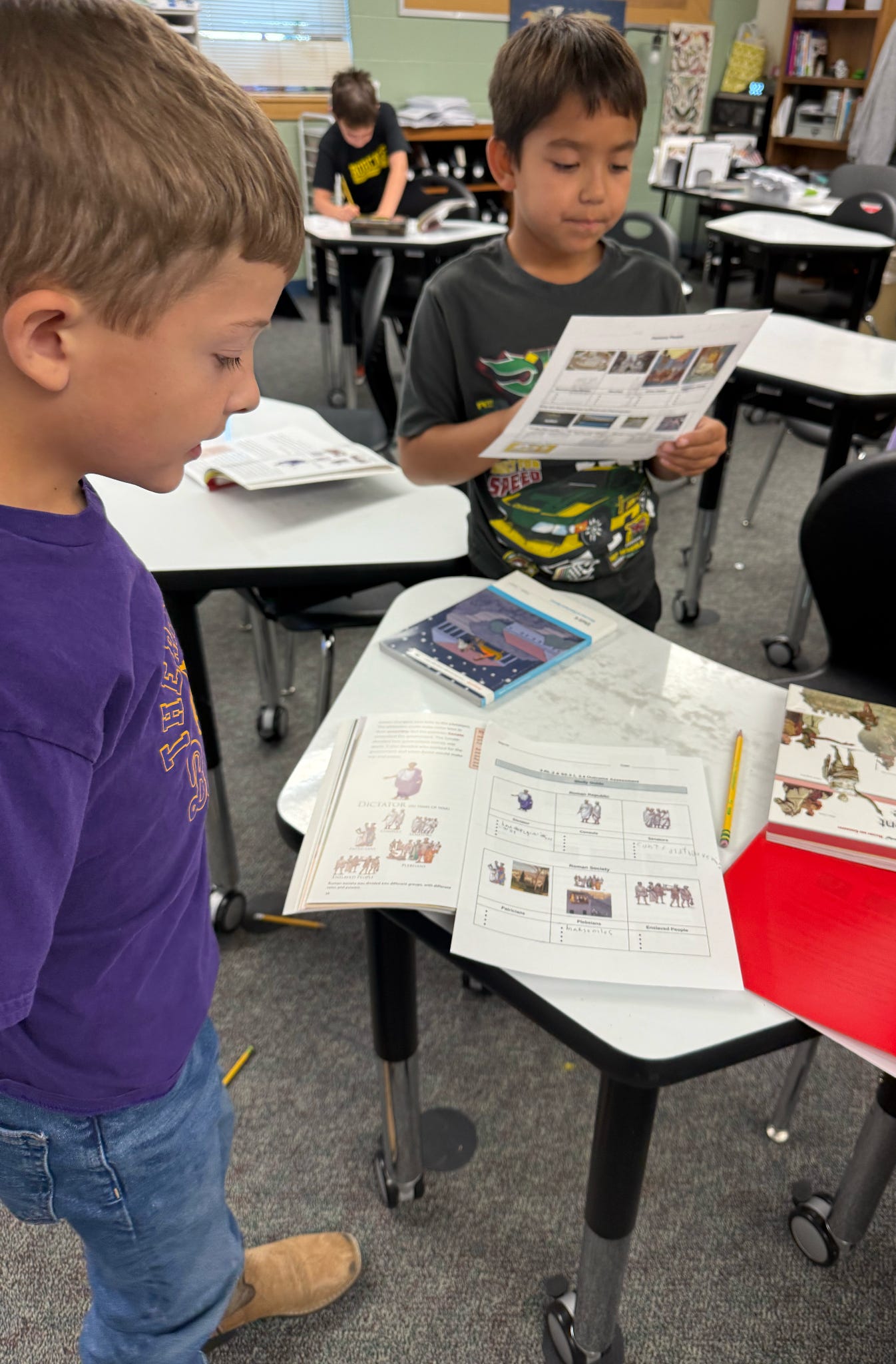
In a perfect world, writing curriculum would not be left to teachers. But that is not the reality for many. But even with a quality curriculum, lessons can be refined. Whether you create lessons from scratch or wish to elevate the curriculum you have, this list of resources can give you a place to start. This is not an exhaustive list, but these are many of the resources I use to support my own lesson building. These resources are specific to building literature and history lessons.
Lesson Structure
start here
Teach Fast: Focused Adaptable Structured Teaching by Gene Tavernetti
A valuable how-to guide to lesson planning with a purposeful structure to keep lessons focused and delivered efficiently.
Primary Reading Simplified: A Practical Guide to Classroom Teaching and Whole-School Implementation by Christopher Such
Such has simplified the reading lesson to include a Fluency Read, Extended Read, and Close Read. This book has really helped me ground my reading lessons on what matters.
The Teach Like a Champion Guide to the Science of Reading: Translating Research to Reignite Joy and Meaning in the Classroom by Doug Lemov, Colleen Driggs, and Erica Woolway
An excellent resource on how to design an reading lesson, including quality examples of booklets to imitate.
Instructional Principles
core principles for quality instruction
Ausubel’s Meaningful Learning in Action by Sarah Cottinghatt
These principles can support building lessons that support meaningful learning, “the connection between new information and relevant existing ideas to form new meanings.” More than just activating prior knowledge, meaningful learning delves deeper and more intentionally into connecting to what students already know.
Rosenshine’s Principles in Action by Tom Sherrington
This is a practical reference for building Rosenshine’s principles into lessons.
Why Students Forget and What You Can Do About It - Scientists in the Making by Marcie Samayoa
A practical guide on how to design the Do Now or retrieval practice portion of the lesson.
Developing Questions
art of the question
The Writing Revolution 2.0: A Guide to Advancing Thinking Through Writing in All Subjects and Grades by Judith C. Hochman, Natalie Wexler, and Kathleen Maloney
This is my go-to resource for designing thoughtful and rigorous questions for verbal and written responses.
Robust Comprehension Instruction with Questioning the Author: 15 Years Smarter by Isabel L. Beck, Margaret G. McKeown, and Cheryl A. Sandora
Engender rich discussion with open-ended queries. This is a must-have reference for designing well-crafted questions to embed in knowledge-building lessons.
Vocabulary
language instruction
I look to these two educators for building the vocabulary portion of my lessons. Their specialty in vocabulary work in the classroom is phenomenal and practical for any teacher:
Jake Cowling has an excellent Substack with many posts on Vocabulary instruction in the classroom, including this one: Faultless Vocabulary Instruction: Guaranteeing Understanding with Structural Precision
Sean Morrisey shares his unique vocabulary instructional methods on podcasts including these: [Listen Again] Vocabulary Instruction with Sean Morrisey with Melissa & Lori Love Literacy ® - Podcast and S3E9: The Impact of Vocabulary with Sean Morrisey on The Road to Reading Podcast
Bringing Words to Life: Robust Vocabulary Instruction by Isabel L. Beck, Margaret G. McKeown, Linda Kucan
A must-have reference for building the vocabulary portion of your lessons.
Assessment
responsive teaching
Embedded Formative Assessment (Strategies for Classroom Formative Assessment That Drives Student Engagement and Learning) by Dylan Wiliam
The most difficult part of the lesson is designing high-quality assessment questions. This is an important resource for understanding what assessment should look like.
Curriculum
foundational support
Download Free Curriculum – Core Knowledge Foundation
For a high-quality free curriculum resource, look to Core Knowledge Foundation. It is also an excellent resource for maps, images, text, questions, assessments, scope and sequence, content, and much more.
Building Knowledge Lessons serves like a "Grand Central" for everything teaching related - a high-density starting point for those uninitiated like me..
Thank you and happy 2026!